
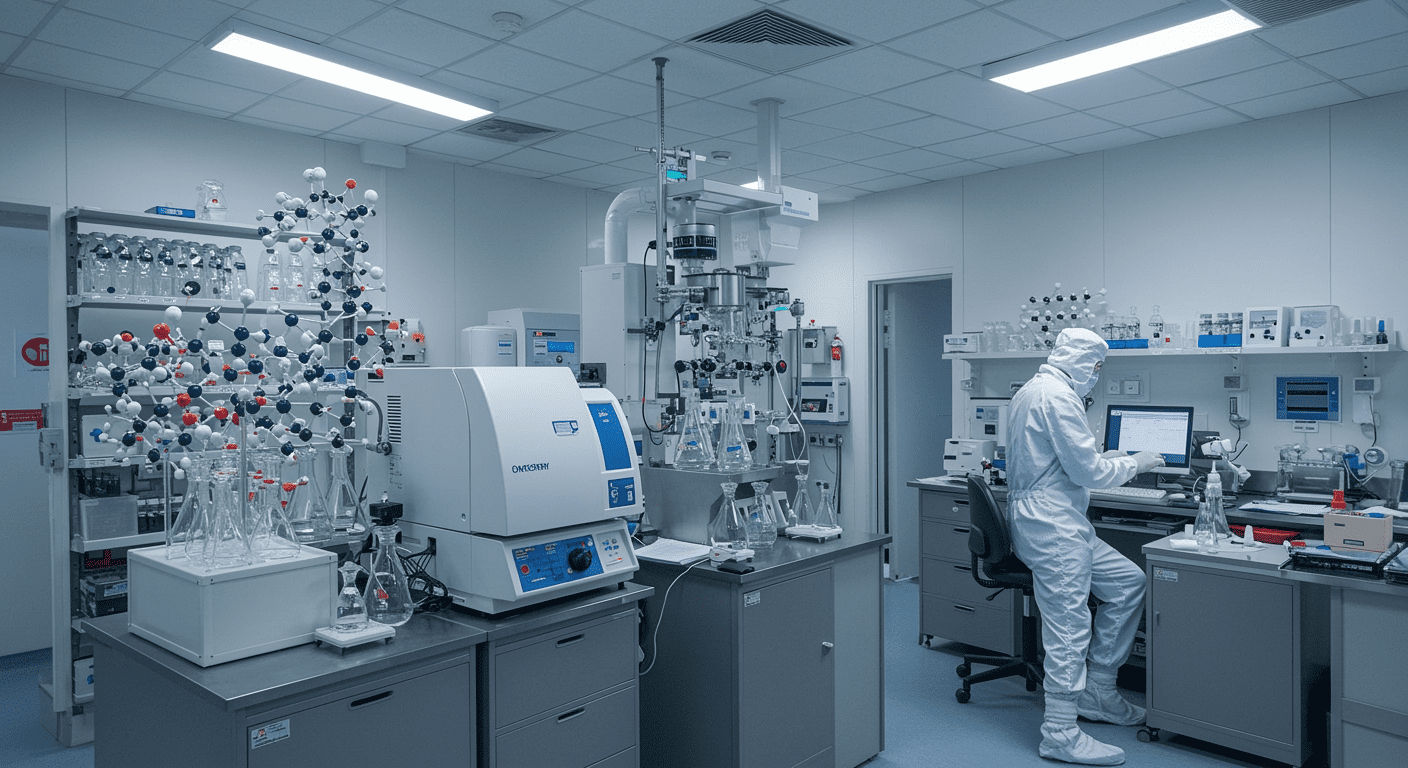
The unexpected evolution in the pharma sector has driven rapid growth through new technologies, regulatory changes, and global demand. All such approaches have transformed the pharmaceutical industry — companies are no longer just producing medicines. We are now focused on efficiency, safety, and speed while maintaining high-quality standards.
Let’s break down the latest Pharma Manufacturing Trends 2026. This guide provides insights into how technologies such as AI, pharma manufacturing, and continuous manufacturing are shaping the healthcare sector. Are these changes worthwhile — or just worthless?
Understanding Pharma Manufacturing
Today, the Pharma Manufacturing industry is undergoing major changes, converting raw materials and chemicals into safe and effective medications. It includes certain steps that must be followed carefully — formulation, mixing, tablet compression, capsule filling, packing, and labelling, along with quality testing.
Earlier, traditional manufacturing methods were slower and labour-intensive. But with increased global demand for high-quality medicines, quicker production with minimal errors and improved scalability has become essential. This is where innovations such as artificial intelligence and the latest pharma manufacturing trends in 2026 come into play.
To understand how Pinnacle Life Science approaches manufacturing excellence, explore our Infrastructure & Manufacturing capabilities.
Key Pharma Manufacturing Trends 2026
There are ample trends in Pharma Manufacturing that have greatly changed the healthcare sector. Many companies today are adopting new approaches to improve efficiency, reduce costs, and maintain product quality. Some of the most important are as follows:
1. Adoption of AI in Pharma Manufacturing
The introduction of AI Pharma Manufacturing has completely transformed how medicines are developed and produced. The integration of artificial intelligence supports:
- Predicting product quality and outcomes
- Optimizing production processes
- Reducing waste and errors
- Enhancing decision-making in supply chains
Today, pharma companies are using AI tools to precisely analyse large datasets, significantly speeding up drug development. According to McKinsey & Company, AI-driven manufacturing systems are projected to reduce production costs by up to 20% in the coming years.
At Pinnacle Life Science, our Research and Development division integrates advanced analytical technologies to stay ahead of these trends.
2. Continuous Manufacturing Pharma
Continuous Manufacturing Pharma is replacing earlier batch processing, keeping the production process accurate and perfectly streamlined.
Benefits include:
- Faster production
- Reduced risk of contamination
- Better quality control
- Lower operational costs
The U.S. Food and Drug Administration (FDA) actively encourages continuous manufacturing adoption as part of its pharmaceutical quality initiative, recognising it as a key driver of supply chain resilience and drug quality.
Continuous manufacturing is helping pharma companies like Pinnacle improve efficiency and accelerate the launch of medicines. Learn more about how our CDMO services support modern drug manufacturing.
3. Digital Transformation in Manufacturing
In pharma manufacturing, digital transformation has become a major and inseparable part. The use of smart sensors, IoT devices, and advanced analytics tools is reshaping how drug production, quality checks, and demand forecasting are handled — enabling smarter and more flexible operations.
Digital systems improve:
- Real-time monitoring
- Compliance with regulatory standards
- Reduction of human error
The World Health Organization (WHO) highlights digital health technologies as central to achieving better healthcare access and more reliable medicine supply globally.
For a deeper look at how regulatory compliance integrates with digital transformation, read our blog on Regulatory Services in Pharma: Ensuring Compliance, Quality, and Global Approvals.
4. Focus on Sustainability
Among the Pharma Manufacturing Trends 2026, sustainability has become one of the most important. Adopting sustainable energy use, minimising waste, and using eco-friendly packaging makes practices more environmentally responsible.
Companies focused on a sustainable approach benefit from:
- Reduced operational costs
- Compliance with environmental regulations
- Enhanced corporate social responsibility
The European Medicines Agency (EMA) has issued guidance encouraging pharmaceutical companies to embed environmental sustainability into their manufacturing processes.
5. Personalized Medicine Manufacturing
Patient-centric treatments are driving the development of drugs tailored to each individual’s needs — customized formulations for individual patients or small groups following clinical studies.
Personalized medicine manufacturing requires:
- Advanced production technologies
- Tight quality control
- Faster response to clinical needs
By integrating AI and continuous manufacturing, pharma companies can efficiently meet the growing demand for customized therapies. Our blog on The 2026 “Precision Medicine” Shift explores this trend in greater depth.
The National Institutes of Health (NIH) recognises personalized medicine as one of the most transformative shifts in modern healthcare, enabled by genomics and advanced manufacturing.
6. Advanced Quality Control
Medicines need to be safe from production through to market — which is why quality checks are more important than ever. Modern pharma manufacturing relies on automated testing, real-time monitoring, and AI-based predictions to ensure consistent product quality control.
Trends in 2026 include:
- Predictive quality monitoring
- Inline process analytics
- Automated defect detection
For Pinnacle Life Science’s approach to quality assurance, visit our Quality Infrastructure page. You can also read about how we maintain a Zero-Defect Culture beyond USFDA inspections.
Benefits of Adopting New Pharma Manufacturing Trends
Most companies are adopting modern pharma manufacturing trends for 2026 to make drug development more precise and safer. Key benefits include:
- Efficiency: Faster production with less waste
- Cost savings: Reduced energy consumption and labour costs
- Quality: Improved consistency and compliance with regulations
- Flexibility: Ability to adjust production quickly based on demand
- Innovation: Easier integration of new therapies like biologics and personalized medicine
Role of AI Pharma Manufacturing in the Future
AI Pharma Manufacturing isn’t just an advanced tool — it is now a core component of the pharmaceutical sector. Explore our product portfolio to understand the breadth of innovations Pinnacle Life Science brings to the market.
Key roles of AI include:
- Predicting production bottlenecks
- Optimizing formulation and batch processing
- Real-time decision-making for complex manufacturing tasks
- Reducing downtime and production errors
According to Deloitte’s Life Sciences report, AI and machine learning are set to be the most disruptive forces in pharmaceutical manufacturing over the next decade.
How Continuous Manufacturing Pharma Improves Production
The replacement of traditional batch methods with continuous production is now well underway, reducing delays, minimising errors, and ensuring consistent product quality.
Key advantages include:
- Faster scale-up for commercial production
- Better integration with AI systems for monitoring
- Reduced inventory and storage costs
- Easier compliance with global standards
This integrates closely with CDMO models — read our complete guide to CDMO Services in Pharma for more detail. Also, our blog on Vertical Integration and Supply Certainty explains how continuous manufacturing supports a more reliable medicine supply chain.
Challenges in Modern Pharma Manufacturing
Although there are several benefits of AI and continuous manufacturing, challenges remain:
- High initial investment in technology and equipment
- Training employees to work with advanced systems
- Ensuring data security and privacy
- Regulatory adaptation to new processes
The International Council for Harmonisation (ICH) provides quality guidelines that help manufacturers navigate these regulatory challenges while transitioning to modern manufacturing approaches.
Future Outlook for Pharma Manufacturing
The future of drug production is getting smarter, faster, and safer — driven by Pharma Manufacturing Trends 2026. Key future developments include:
- Fully automated, AI-driven facilities
- Sustainable and eco-friendly operations
- Integration of continuous manufacturing and personalized medicine
- Real-time quality and supply chain monitoring
Pinnacle Life Science is actively positioned at the intersection of these advancements. Learn more about our global presence and how we are serving international markets with these cutting-edge approaches.
Conclusion
The increasing demand for safe and effective medicines is the major driver of transformation in the pharmaceutical industry. Modern pharma manufacturing isn’t limited to bulk drug production — the adoption of advanced technologies such as AI pharma manufacturing and Continuous Manufacturing Pharma has reshaped the sector entirely. These cutting-edge technologies make drug development efficient, reliable, and safer before each medicine reaches the patient.
If you are looking for a partner that embodies these innovations, contact Pinnacle Life Science today.
FAQs
1. What is pharma manufacturing?
Pharma manufacturing is the process of producing medicines from raw materials, including formulation, packaging, and quality control. Learn more about our manufacturing infrastructure.
2. What are the top pharma manufacturing trends in 2026?
The key pharma manufacturing trends 2026 include AI integration, continuous manufacturing, digitalization, personalized medicine, and sustainable production. Read our blog on The 2026 Precision Medicine Shift for related insights.
3. How is AI transforming pharma manufacturing?
AI in pharmaceutical manufacturing helps predict quality issues, optimize production, reduce errors, and improve efficiency throughout the manufacturing process. See how it connects to Oncology CDMO trends in India.
4. What is continuous manufacturing pharma?
Continuous manufacturing in pharma is a process in which drugs are produced in a continuous, streamlined manner rather than via traditional batch production — improving speed and consistency.
5. Why should pharma companies adopt these new manufacturing trends?
Adopting these trends improves efficiency, reduces costs, ensures product quality, enhances flexibility, and supports the development of innovative therapies. Explore Pinnacle Life Science’s full product range to see these principles in action.
