
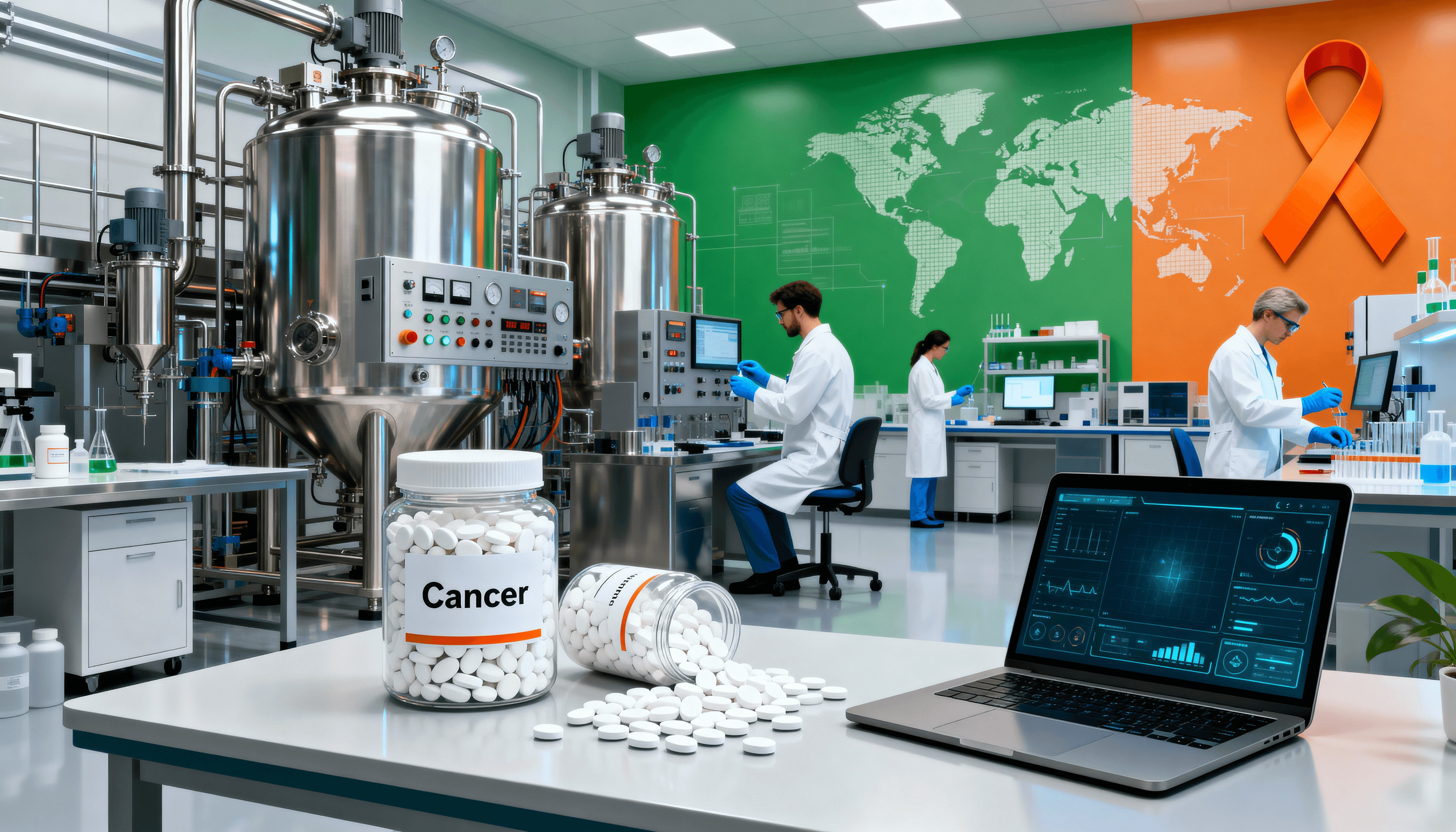
Oncology drug manufacturing in India is shaping the future of global cancer treatment. With rising cancer cases worldwide, the demand for effective and affordable oncology medicines is increasing rapidly. India has emerged as a trusted hub for oncology drug development, offering cost-efficient solutions without compromising quality. This blog explores the future of oncology manufacturing in India, CDMO trends, and growth drivers that will define the industry beyond 2026.
Over the years, India has been one of the most trusted global hubs for oncology drug development, and countries across the world continue to look to India for manufacturing cost-efficient yet effective oncology medications.
Today, the future of Oncology Drug Manufacturing in India looks strong and precise — driven by rising global demand, outsourcing trends, and continued innovation. Let’s explore CDMO trends, their advantages, and the regulatory forces shaping India’s oncology manufacturing sector.
Understanding Oncology Drug Manufacturing in India
Oncology drug manufacturing produces the medications used by cancer patients. These medicines are precise, powerful, and need to be handled with extreme care. The oncology drug manufacturing process typically includes sourcing raw materials, producing the drugs, testing them, and safely packing them.
Oncology Drug Manufacturing in India has grown significantly because Indian companies have learned to produce complex cancer medicines at an affordable price while maintaining quality. According to the World Health Organization (WHO), cancer is one of the leading causes of death globally, with nearly 10 million deaths recorded annually — making affordable access to cancer medicines a critical global priority.
To understand how Pinnacle Life Science supports this mission, explore our oncology-focused product range.
Why India Is Important in the Global Oncology Market
With the increasing global demand for oncology drugs, India plays a pivotal role in supplying cancer medicines worldwide. The Indian pharmaceutical sector has been strengthened over decades, allowing manufacturers to gain deep expertise in producing a wide range of cancer medicines.
A major driver is affordability. Cancer treatments are among the most expensive in the world, and Indian manufacturers have managed to reduce cost without compromising on safety — making Indian oncology medicines accessible to millions of patients globally. The Indian Pharmaceutical Alliance recognises India as the world’s largest provider of generic medicines, supplying over 20% of global generic drug exports by volume.
As a result, the Top Indian Oncology Pharmaceutical Companies are now leading trusted partners in the global healthcare sector. Learn more about Pinnacle Life Science’s global presence and international reach.
What Are CDMO Services in Oncology?
A CDMO (Contract Development and Manufacturing Organisation) is a dedicated company that supports the development and manufacturing of medicines. Rather than handling everything in-house, pharma companies today are increasingly outsourcing manufacturing to specialised partners.
In oncology, this model has become especially critical. Oncology CDMO trends show that more pharma companies are seeking end-to-end support — from early drug development to large-scale commercial production. Indian CDMOs offer ready-to-use facilities, skilled scientists, and experienced research teams, making them ideal manufacturing partners.
For a comprehensive understanding of how CDMO services work, read our guide on CDMO Services in Pharma: A Complete Guide to Modern Drug Manufacturing.
According to Grand View Research, the global CDMO market is projected to surpass USD 300 billion by 2030, with oncology being one of the fastest-growing therapeutic segments.
Key Oncology CDMO Trends Shaping the Future
Several important Oncology CDMO Trends are driving growth in India:
- Growing outsourcing demand — The high cost of setting up dedicated oncology manufacturing facilities is pushing more global pharma companies to outsource to Indian CDMOs.
- Faster time-to-market — Companies are seeking partners with ready infrastructure to accelerate drug launches. Our blog on Pharma Manufacturing Trends 2026 covers how AI and continuous manufacturing are further reducing time-to-market.
- Specialised handling capabilities — Oncology drugs require strict containment protocols and controlled environments. Indian CDMOs are now well-equipped to meet these demands, supported by our state-of-the-art manufacturing infrastructure.
All these trends highlight why CDMO partnerships are central to India’s growing role in the future of oncology manufacturing.
Pharmaceutical Contract Manufacturing Benefits for Oncology
Pharma contract manufacturing means a company dedicates itself to manufacturing medicines on behalf of others — a model especially well-suited to the high-cost, high-complexity world of oncology drug development.
Pharmaceutical contract manufacturing benefits include:
- Lowering production costs
- Reducing investment risk
- Enabling faster scaling
- Providing access to experienced manufacturing teams
This model is one of the key reasons global pharma companies choose Indian CDMO partners. The U.S. Food and Drug Administration (FDA) provides clear regulatory frameworks for contract manufacturing arrangements, which Indian CDMOs adhere to when serving regulated global markets.
Why Contract Manufacturing Is Growing Faster in Oncology
Cancer drugs require specialised facilities and strict safety measures that demand significant capital investment. Outsourcing helps pharma brands avoid these upfront challenges while still accessing world-class manufacturing expertise.
The benefits of pharmaceutical contract manufacturing include flexibility around production volumes that fluctuate with market demand. Indian CDMOs ensure reliability while maintaining quality — making them the preferred drug manufacturing partners in oncology.
Read how Pinnacle Life Science’s approach to vertical integration supports supply certainty for global pharma partners.
Role of Top Indian Oncology Pharmaceutical Companies
The Top Indian Oncology Pharmaceutical Companies are now playing a transformative role in the global healthcare sector. They have invested heavily in modern plants, advanced equipment, and skilled talent to enable seamless production of a wide range of cancer medicines — including chemotherapy drugs, targeted therapies, and supportive oncology treatments.
Indian oncology companies can now manufacture high-quality medicines at scale, making them key players in the global oncology market and vital partners for international pharmaceutical brands via third-party CDMO manufacturing models.
Pinnacle Life Science is a prime example — as a subsidiary of Aarti Drugs Ltd., we combine deep oncology expertise with a compliance-first manufacturing culture. Explore our new standards in Oncology CDMO for insights into how we continue to raise the bar.
Importance of Pharma Compliance in Oncology Manufacturing
Compliance is critical in oncology given the potency and complexity of cancer drugs. Indian drug manufacturers follow strict pharma compliance standards set by both national and international regulatory authorities, including the Central Drugs Standard Control Organisation (CDSCO) in India and international bodies such as the European Medicines Agency (EMA).
From regular audits and detailed documentation to rigorous quality checks, every step ensures each product is safe for patient use. Strong compliance builds the trust that allows Indian companies to export oncology medicines to regulated global markets, including the US, EU, and beyond.
Learn how Pinnacle Life Science maintains a Zero-Defect Culture beyond USFDA inspections — and what that means for our partners worldwide. You can also explore our Quality Infrastructure to understand the systems behind our compliance standards.
How Compliance Drives Growth and Trust
Pharma compliance does more than fulfil legal requirements — it improves consistency, reduces risk, and ensures patient safety. Global pharma companies increasingly prefer partners with strong compliance records, and Indian manufacturers with proven track records are securing long-term contracts and expanding their global footprint in oncology drug manufacturing.
Regulatory alignment with frameworks like ICH Quality Guidelines also helps Indian CDMOs keep pace with evolving international standards, further strengthening their position as preferred global manufacturing partners.
Conclusion: The Future Looks Beyond 2026
In the coming years, India is expected to play a far bigger role in oncology drug manufacturing. Investments in AI, automation, and machine learning — alongside a growing pool of skilled professionals — are rapidly advancing capabilities across the sector.
The Oncology CDMO trend will continue moving toward more strategic partnerships and long-term collaborations. From pharmaceutical contract manufacturing benefits to robust compliance — Indian drug manufacturers like Pinnacle Life Science are well-equipped for sustained growth as a leading hub for oncology pharmaceutical manufacturing worldwide.
Interested in exploring a manufacturing partnership? Contact Pinnacle Life Science today.
FAQs
1. Why is oncology drug manufacturing in India growing so fast?
Oncology drug manufacturing in India is growing because Indian companies can produce high-quality cancer medicines at a lower cost while adhering to strict safety standards. Global demand, outsourcing trends, and strong manufacturing infrastructure are key drivers. Read more in our blog on Pharma Manufacturing Trends 2026.
2. What are the major oncology CDMO trends in India?
Current oncology CDMO trends include increased outsourcing by global pharma companies, demand for end-to-end development and manufacturing services, faster scale-up, and long-term strategic partnerships with Indian CDMOs. Explore our CDMO Services Complete Guide for more.
3. What are the pharmaceutical contract manufacturing benefits for oncology companies?
The main benefits of pharmaceutical contract manufacturing are cost savings, faster production, reduced investment risk, access to advanced facilities, and flexibility in manufacturing volumes. Learn about Pinnacle Life Science’s manufacturing capabilities here.
