
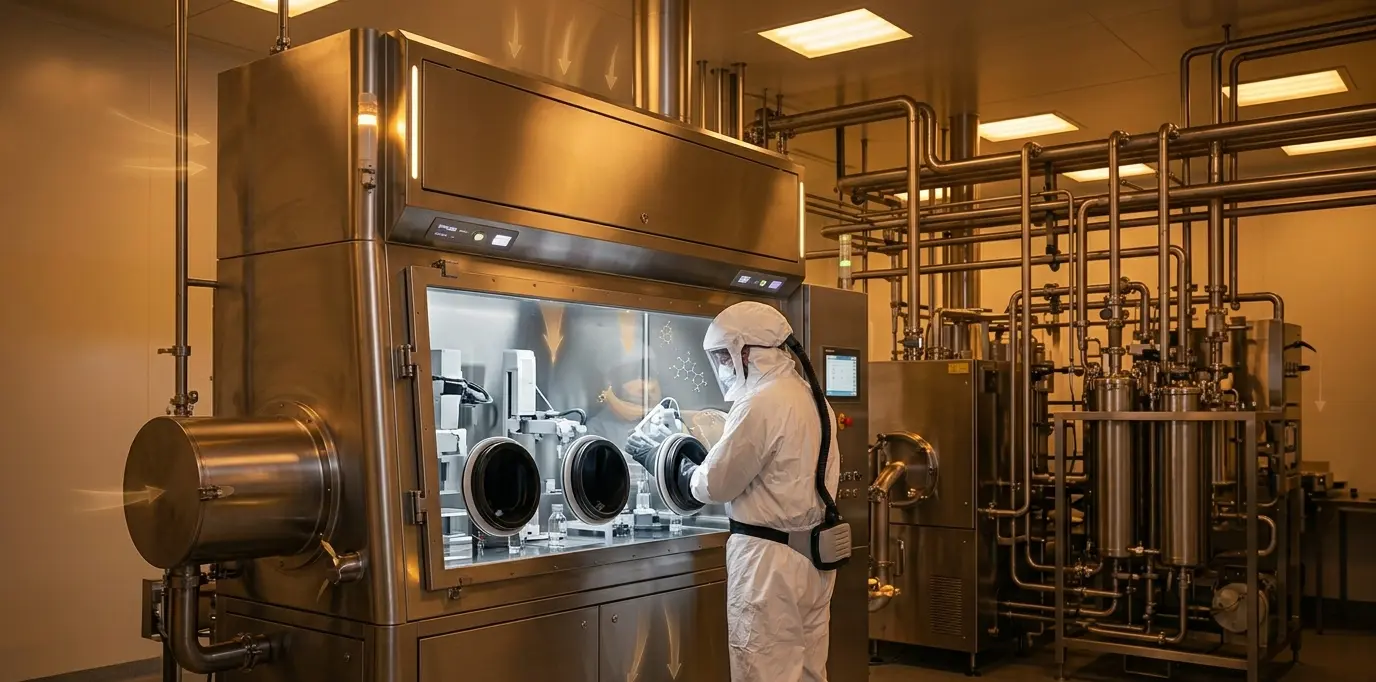
OEB Level-5 is the highest occupational safety classification in pharmaceutical manufacturing. It is required for cytotoxic oncology APIs and HPAPI compounds where airborne worker exposure must stay below 1 microgram per cubic metre of air. A genuinely certified facility needs sealed isolator machines, a fully dedicated negative-pressure HVAC system, closed-system waste handling, nanogram-level cleaning validation, and personnel using supplied-air respirators. Only a small number of CDMOs globally hold genuine OEB Level-5 certification, most operate at OEB Level-3 or Level-4 at best. Always ask for a dated, third-party certificate before committing to any CDMO for an HPAPI oncology programme.
Let’s start with something most CDMO sales teams will never tell you.
Claiming OEB Level-5 capability costs nothing. A few words on a website, a line in a capabilities deck, a confident answer on a qualification call. Easy.
Actually having OEB Level-5 capability? That costs between USD 30 million and USD 80 million per certified manufacturing suite. It requires purpose-built infrastructure, third-party validation, ongoing performance testing, and a manufacturing team trained specifically for cytotoxic compound handling.
Most CDMOs have not made that investment. Yet most CDMOs that manufacture oncology products will tell you they can handle your compound.
This guide cuts through that. It tells you, in plain, easy language, exactly what OEB Level-5 containment means, what a genuinely certified facility looks like, why it matters so much for your oncology programme, and precisely how to verify a CDMO’s claim before you sign anything.
If your drug involves high-potency active pharmaceutical ingredients, and most modern cancer drugs do, this is the most important due diligence guide you will read this year.
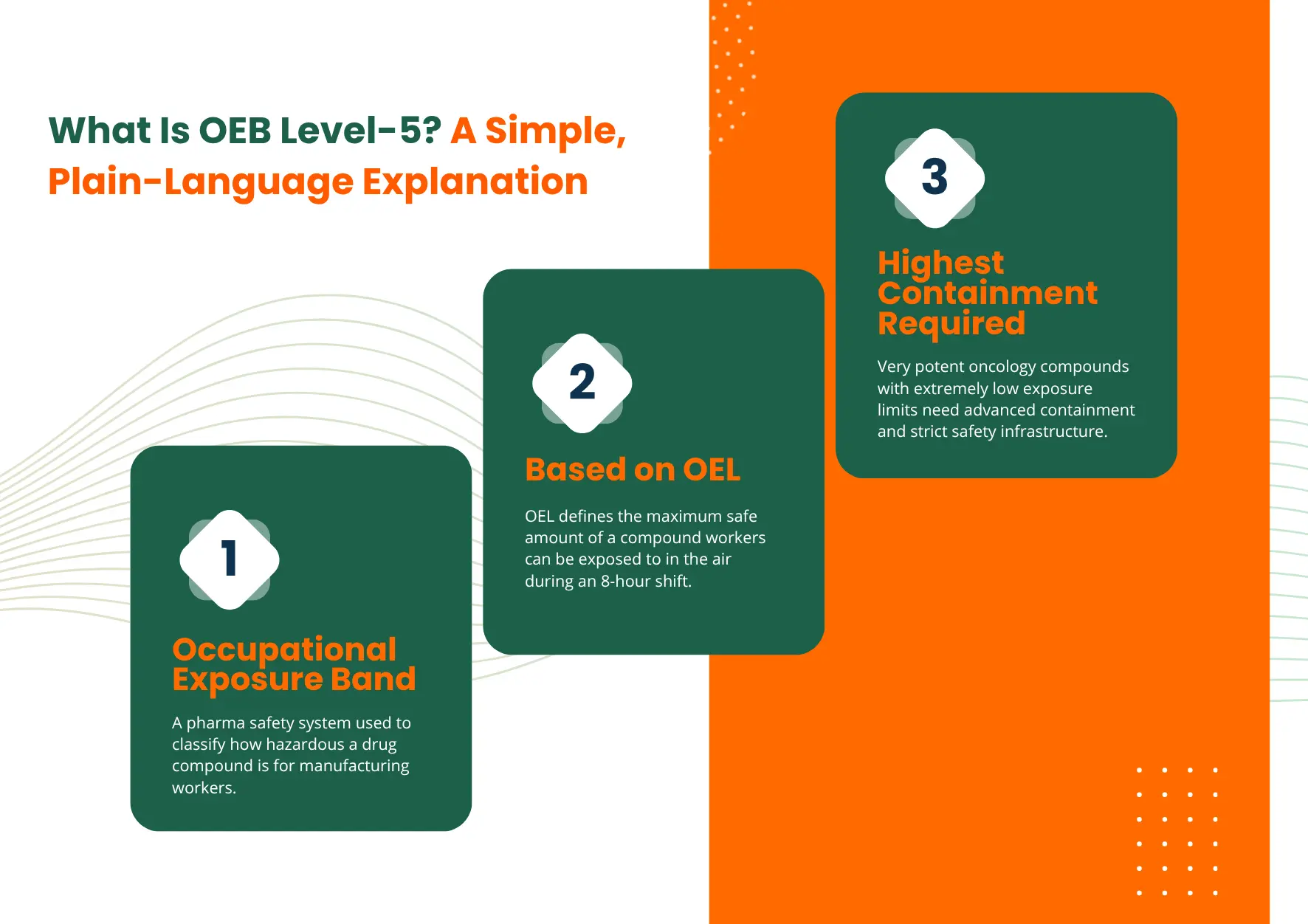
What Is OEB Level-5? A Simple, Plain-Language Explanation
OEB stands for Occupational Exposure Band.
It is the system the pharmaceutical industry uses to classify how dangerous a drug compound is to the people who manufacture it, and to specify what safety infrastructure a facility must have to handle it.
The classification is based on something called the Occupational Exposure Limit (OEL). This is the maximum amount of a compound that can be present in factory air over an 8-hour working shift without causing harm to the workers breathing it. The lower the OEL, the more dangerous the compound, and the more stringent the containment requirements.
Here is the full OEB system in plain language:
| OEB Level | Max Allowed in Air (8-hr shift) | Typical Compound Types | What the Facility Must Have |
| OEB 1 | More than 1 mg per m³ | Ordinary, non-hazardous APIs | Standard open handling, basic PPE |
| OEB 2 | 100 µg – 1 mg per m³ | Mildly potent APIs | Basic engineering controls |
| OEB 3 | 10 – 100 µg per m³ | Potent APIs, some hormones | Closed systems, gloveboxes |
| OEB 4 | 1 – 10 µg per m³ | HPAPIs, cytotoxic drugs | High-containment isolators, negative pressure |
| OEB 5 | Less than 1 µg per m³ | Most cytotoxic cancer drugs, all ADC payloads | Full OEB Level-5 certified suites, no exceptions |
To put OEB Level-5 in perspective: 1 microgram is one millionth of a gram. A single human hair weighs approximately 60 micrograms. An OEB Level-5 certified facility must contain airborne compound exposure to amounts 60 times smaller than one human hair, per cubic metre of air. Every minute. Every batch. Every day.
That is not just tight control. That is extraordinary precision engineering, sustained at every stage of manufacturing.
The majority of cytotoxic oncology APIs, chemotherapy agents, targeted therapies, kinase inhibitors, taxanes, vinca alkaloids, are classified at OEB Level-4 or Level-5. And antibody-drug conjugate (ADC) payloads, the fastest-growing category in oncology drug development, are classified at OEB Level-5 in virtually every case.
This means the vast majority of modern oncology drug programmes require a CDMO with OEB Level-5 certified infrastructure, and most CDMOs simply do not have it.
Why OEB Level-5 Should Be Your First Filter When Choosing an Oncology CDMO
Here is the hard, practical truth.
If your oncology compound is classified at OEB Level-5, and your prospective CDMO does not hold a current, independently verified OEB Level-5 containment certificate, they cannot manufacture your drug. Not safely. Not compliantly. Not legally.
This is not a commercial negotiation point. It is a hard technical and regulatory line with two very specific consequences when it is crossed.
Consequence 1, Worker Safety Is Compromised
Manufacturing staff who handle cytotoxic oncology APIs in an inadequately contained facility are being exposed to compounds that, at microgram concentrations, can cause serious and sometimes irreversible health damage, bone marrow suppression, organ toxicity, carcinogenic effects, reproductive harm.
This is not a theoretical risk. It is a documented occupational health reality in facilities that attempt to handle OEB Level-5 compounds without certified infrastructure. The people who get hurt are the workers in the manufacturing plant, skilled technicians and scientists who trusted their employer’s safety claims.
Consequence 2, Your Programme Fails Regulatory Inspection
The FDA, MHRA, and EMA take inadequate containment for cytotoxic compounds very seriously. A facility attempting to manufacture OEB Level-5 compounds without certified infrastructure will receive critical GMP observations or a Warning Letter, and your programme batches will not be releasable.
The result: a forced CDMO switch mid-programme, a 12–18 month timeline setback, and a regulatory remediation process that consumes resources and credibility you cannot get back.
OEB Level-5 certification is not the third or fourth filter in your CDMO evaluation. It is the first.
What Does a Genuinely Certified OEB Level-5 Facility Actually Look Like?
A certified OEB Level-5 manufacturing suite is not just a room with better ventilation and stricter PPE. It is a purpose-built, independently validated manufacturing environment built from the structural level up, with four interconnected physical and operational systems that must all work together, continuously, to maintain containment.
Physical Requirement 1, Sealed Isolator Machines for Every Single Manufacturing Step
Every step involving your compound, weighing, dispensing, granulating, blending, compressing, coating, packaging, must happen inside a certified isolator machine. Think of it as a completely sealed, negative-pressure glove box at industrial manufacturing scale.
Operators use built-in gloves to perform work with the compound, their hands go through sealed ports into the isolator, but the operator’s body, face, and respiratory system are never in contact with or near the compound environment at any point during production.
These isolators are not simply purchased and used. They must be regularly performance-validated using a standardised surrogate compound test. The industry standard method uses naproxen sodium as the surrogate compound, with a containment benchmark of 100 nanograms per cubic metre or less.
One nanogram is one billionth of a gram. That is the level of containment performance that needs to be demonstrated, and documented, every single validation cycle for a facility to maintain its OEB Level-5 certification.
Any result above 100 nanograms per cubic metre means the isolator is not performing to OEB Level-5 standard and manufacturing must stop until the containment gap is identified and remediated.
Physical Requirement 2, A Fully Dedicated Negative-Pressure HVAC System
The air handling system in an OEB Level-5 manufacturing suite must be completely independent from every other area of the facility. No shared air circuits. No shared air handling units. No shared exhaust pathways.
The technical specifications required are precise and non-negotiable:
- A negative pressure differential of at least 12.5 Pascals relative to all adjacent areas, maintained continuously, including during personnel movement, equipment transfers, and changeover activities
- Interlocked airlocks at every entry and exit point, both doors in any airlock cannot physically open simultaneously, creating a pressure cascade that prevents contaminated air from escaping the suite
- Supply air: HEPA filtered at the point of entry into the containment suite
- Exhaust air: double-HEPA filtered before release to atmosphere, with the first filter bank changed in-bag inside the containment suite itself, so even filter replacement cannot create an exposure event
- All HEPA filter integrity tested regularly using DOP or PAO aerosol challenge as a mandatory component of the environmental monitoring programme
If any component of this HVAC system fails, a fan motor, a damper, a pressure differential sensor, the manufacturing suite goes offline until the system is verified and restored to specification. There is no workaround.
Physical Requirement 3, Closed-System Waste Handling and Nanogram-Level Cleaning Validation
OEB Level-5 containment does not end when the batch is complete. The moment production finishes is when one of the most demanding parts of the process begins, decontamination and cleaning.
Every piece of equipment that touched the compound, every consumable used during production, every surface in the manufacturing suite must be decontaminated using validated procedures, inside the containment suite, before anything leaves the area.
Cleaning validation acceptance criteria are calculated directly from the compound’s specific OEL. For OEB Level-5 compounds, this typically means surface residue limits in the single-digit nanogram per square centimetre range. Verifying that cleaning has achieved these limits requires:
- Validated swabbing methods with demonstrated, documented recovery factors
- Analytical detection at parts-per-trillion levels, using methods like validated HPLC-MS/MS
- Dedicated analytical laboratory infrastructure that most standard pharma facilities simply do not possess
This is not a slightly stricter version of normal pharmaceutical cleaning validation. It is an entirely different order of magnitude, and it requires analytical investment that is substantial, specialised, and permanent.
Physical Requirement 4, Full Personnel Protection and Medical Surveillance Programme
People working inside an OEB Level-5 manufacturing environment need protection that goes significantly beyond what most pharma workers use day-to-day. The requirements are specific:
- Compound-specific GMP training before any worker handles a new cytotoxic compound, not a generic induction, but training built around the specific hazard profile of each molecule
- For any operation outside a fully sealed isolator: certified powered air-purifying respirators (PAPRs) or supplied-air respirators (SARs), standard N95 dust masks are completely inadequate for OEB Level-5 compounds and must never be used
- A formal biological monitoring programme, baseline medical assessment for every worker before they handle each new compound, followed by periodic biomarker testing using validated, compound-specific analytical methods
- Annual programme review by an occupational health physician, with updates to the monitoring programme every time a new cytotoxic compound enters the suite
This is not a one-time compliance exercise. It is a permanent, ongoing operational commitment that requires a dedicated occupational health function embedded in the manufacturing operation.
The Rise of ADC Manufacturing, Why OEB Level-5 Demand Is Growing Fast in 2026
The fastest-growing segment of oncology CDMO outsourcing in 2026 is antibody-drug conjugate (ADC) manufacturing. And it is growing fast, driven by a wave of ADC approvals and a deep late-stage pipeline of candidates across multiple oncology indications.
ADCs are complex molecules: a targeting antibody linked to an ultra-potent cytotoxic payload via a chemical linker. The payload, the part that kills the cancer cell, is classified at OEB Level-5 in virtually every ADC programme currently in clinical development or commercial production.
The manufacturing complexity goes beyond the payload chemistry alone. The bioconjugation process that links the payload to the antibody, the purification of the resulting drug-antibody conjugate, and the aseptic fill-finish of the final product all involve OEB Level-5 materials at various stages, meaning the entire process chain, not just one step, must meet OEB Level-5 certified standards.
Genuine fit-for-purpose ADC CDMO capability is concentrated among a very small number of specialist manufacturers globally. For pharma companies bringing ADC programmes to clinical or commercial manufacturing scale, verifying OEB Level-5 certification end-to-end, from API dispensing through conjugation through final packaging, is the first and most critical due diligence step.
How to Verify a CDMO’s OEB Level-5 Claims, A Practical 4-Step Checklist
Asking a CDMO whether they have OEB Level-5 capability will get you a positive answer from almost every facility that manufactures oncology products. Here is how you verify that answer systematically, before you commit.
Step 1, Request the Third-Party Containment Certification
A genuinely OEB Level-5 certified facility holds a current certificate from SafeBridge Consultants or an equivalent qualified specialist assessor. This is not a self-assessment or an internal audit. It is an independent technical evaluation conducted by experts who specialise in pharmaceutical containment, and it produces a specific, dated, scoped document.
Ask for:
- The certificate itself, with its issue date and expiry or review date
- The scope of compounds, operations, and manufacturing areas covered
- The containment performance data the assessment was based on
No certificate from an independent assessor = no verified OEB Level-5 capability. A marketing claim is not a certificate.
Step 2, Review the Isolator Containment Performance Validation Data
Ask for the most recent isolator containment performance test results, specifically:
- The methodology used, SMEPAC protocol or equivalent
- The surrogate compound used, naproxen sodium is the industry standard benchmark
- The measured result, must be 100 nanograms per cubic metre or less to meet OEB Level-5 standard
- The date of the most recent test
A refusal to share this data, or a result above the 100 nanogram benchmark, should disqualify the facility from your evaluation immediately.
Step 3, Examine the Cleaning Validation Master Plan
Ask for the facility’s cleaning validation master plan for OEB Level-5 programmes, including:
- Compound-specific surface residue acceptance criteria derived from the specific OEL of your molecule
- Swab recovery validation data, demonstrating that the swabbing method actually picks up the compound reliably at nanogram-per-centimetre levels
- Analytical method validation reports confirming detection capability at parts-per-trillion concentrations
This documentation tells you whether the CDMO has genuinely invested in OEB Level-5 analytical infrastructure, or whether containment certification is the only investment they have made.
Step 4, Conduct a Physical Site Audit With Your QA and EHS Leads
No documentation package substitutes for seeing the facility in person. When you visit, specifically:
- Walk the containment suites, check that isolators are in active, well-maintained use and that containment infrastructure is genuinely integrated into the manufacturing flow, not sitting unused
- Observe the doffing procedure, watch how operators exit the containment area and whether the decontamination process is followed precisely or casually
- Review the environmental monitoring logs, check frequency, results, and how out-of-specification events have been handled
- Inspect the isolator maintenance records, verify calibration schedules, performance test results, and any breach or failure events
- Speak directly with the production operators and QA team, their confidence and fluency with the containment system tells you more than any document
The difference between a well-maintained, genuinely operating OEB Level-5 facility and one that merely claims the standard is immediately visible when you walk the floor with experienced eyes.
Frequently Asked Questions, OEB Level-5 Containment in Oncology Manufacturing
Q1: What is OEB Level-5 in simple terms?
OEB Level-5 is the highest safety classification in pharmaceutical manufacturing. It applies to drugs so potent that the amount allowed in factory air, over an 8-hour working day, is less than 1 microgram per cubic metre. That is one millionth of a gram. To achieve this, a facility needs certified sealed isolators, a dedicated negative-pressure HVAC system, closed waste handling, and nanogram-level cleaning validation. Most cytotoxic cancer drugs and all ADC payloads require OEB Level-5 certified manufacturing.
Q2: How is OEB Level-5 certification different from USFDA approval?
USFDA approval confirms a facility meets current Good Manufacturing Practice standards for pharmaceutical quality, documentation, and process control. OEB Level-5 certification is a separate, specialist technical assessment conducted by third parties like SafeBridge Consultants, confirming that containment infrastructure meets the safety standard for sub-microgram exposure limits. A compliant oncology CDMO needs both, they assess completely different dimensions of facility capability.
Q3: What is an HPAPI and does my oncology drug need OEB Level-5 manufacturing?
HPAPI stands for high-potency active pharmaceutical ingredient, compounds with significant pharmacological activity at very low doses. If your compound has an occupational exposure limit below 1 microgram per cubic metre, it is an OEB Level-5 compound and requires certified OEB Level-5 manufacturing infrastructure. This covers the majority of cytotoxic chemotherapy agents, most targeted oncology small molecules, and essentially all ADC payloads. → NIOSH hazardous drug list, cdc.gov/niosh
Q4: Can most Indian CDMOs handle OEB Level-5 oncology compounds?
Most cannot. OEB Level-5 capability requires a capital investment of USD 30–80 million per certified suite that only a small number of Indian CDMOs have made. Even USFDA-approved facilities in India commonly operate at OEB Level-3 or Level-4 standard. Always independently verify a third-party OEB Level-5 certificate from SafeBridge or equivalent before committing to any CDMO for a cytotoxic oncology programme.
Q5: What is the difference between OEB Level-4 and OEB Level-5 in practical terms?
OEB Level-4 covers compounds with occupational exposure limits between 1 and 10 micrograms per cubic metre and requires high-containment isolators and engineering controls. OEB Level-5 covers compounds below 1 microgram per cubic metre and adds stricter containment performance validation standards (100 nanograms per cubic metre benchmark), nanogram-per-centimetre surface cleaning acceptance criteria, supplied-air respirators rather than PAPRs, and more intensive biological monitoring for all production personnel. The capital cost difference between a Level-4 and a genuinely certified Level-5 suite runs into tens of millions of dollars.
Q6: Is Pinnacle Life Science certified for OEB Level-5 oncology manufacturing in India?
Yes. Pinnacle Life Science holds USFDA, MHRA, EU-GMP, and ANVISA approvals and our manufacturing facilities in Baddi, Himachal Pradesh are equipped and certified for OEB Level-5 high-potency oncology oral solid dosage programmes, covering the full manufacturing chain from API dispensing through granulation, tablet compression, film coating, and primary packaging, all within certified isolator systems. Our vertical integration through Aarti Drugs Ltd. provides API supply chain resilience that standalone CDMOs cannot match. Contact Pinnacle Life Science today to discuss your HPAPI programme.
Oncology Drug Development Process: Every Stage, and Where Manufacturing Fits In
Most people picture drug development as a straight line. Find a molecule, test it, get approval, ship it. Oncology almost never behaves that way. A cancer drug can look brilliant in a lab dish, behave differently in a patient, and …

Pharmaceutical Contract Manufacturing: A Plain Guide for Drug Companies
Most people assume the company on a medicine box also made the pills inside it, but that’s often not true. This guide breaks down pharmaceutical contract manufacturing in plain terms: what it is, how a CMO differs from a CDMO, how the production process works, and what to check before picking a manufacturing partner.
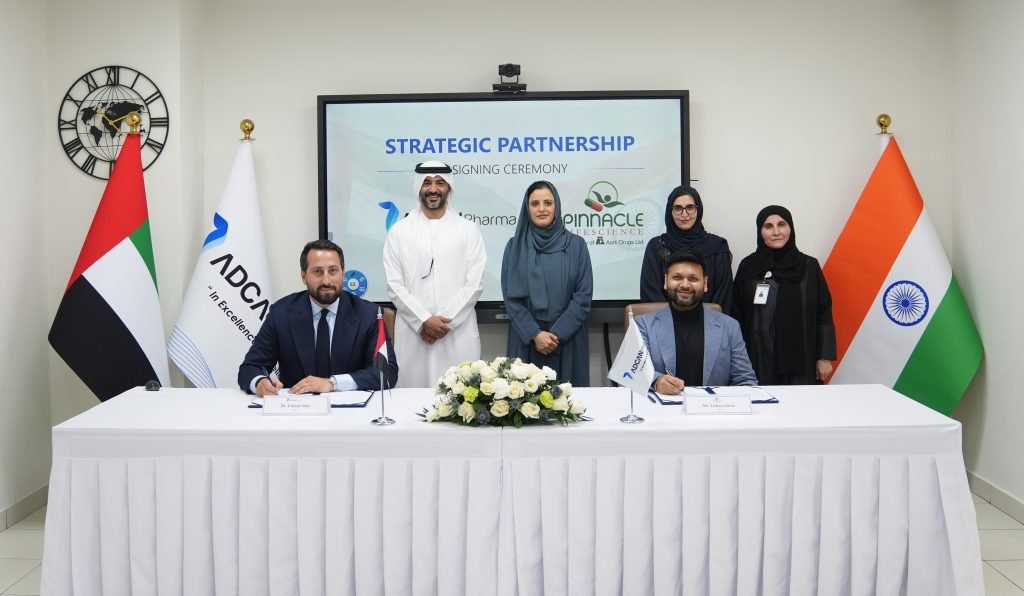
Pinnacle Life Science Partners with ADCAN Pharma for Oncology Manufacturing in the UAE
Pinnacle Life Science has signed a strategic partnership agreement with ADCAN Pharma, a leading UAE based pharmaceutical manufacturer and the country’s first producer of oncology and hormone products. Under this agreement, Pinnacle will license 12 oncology products to ADCAN, followed …
