
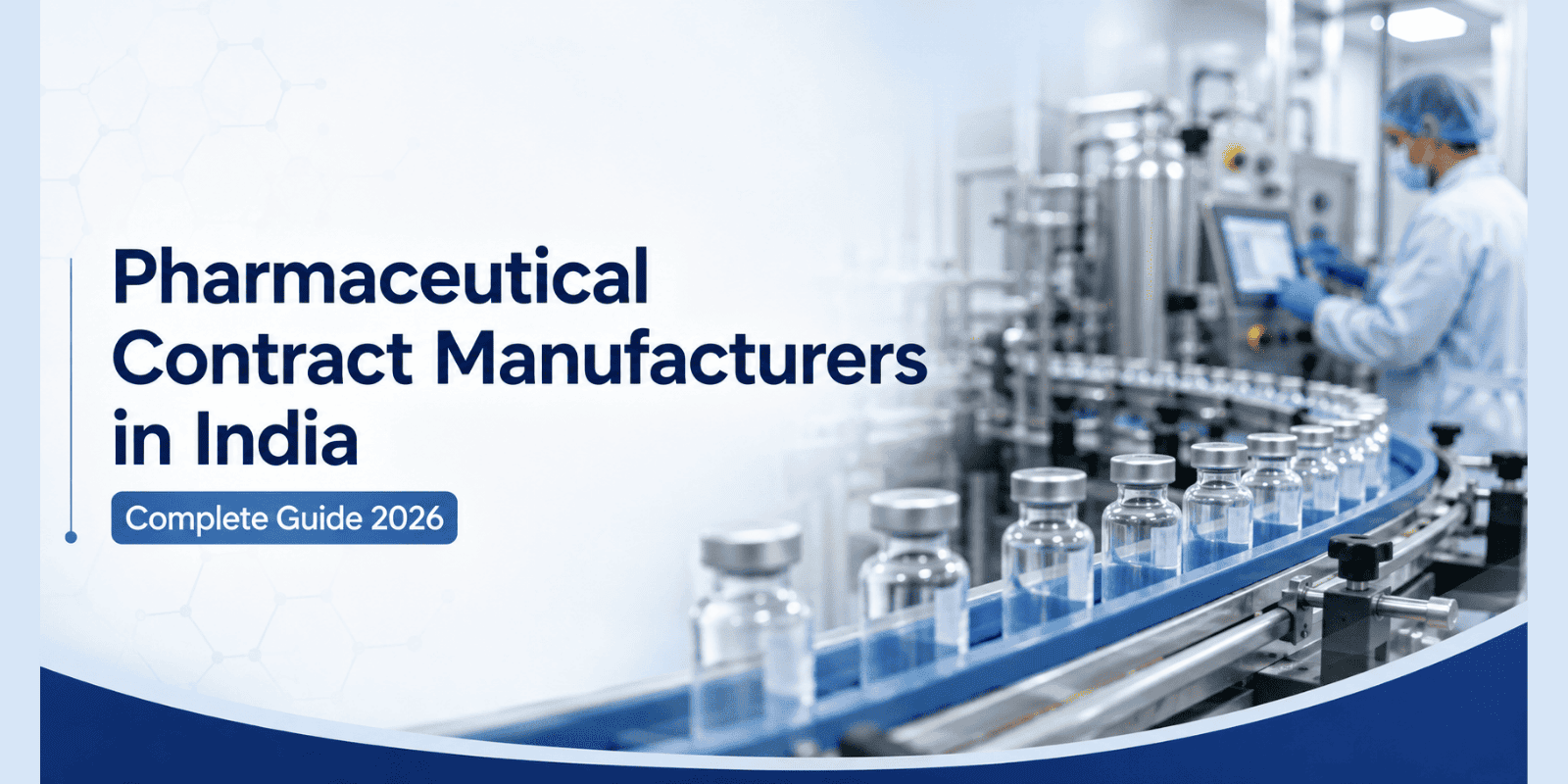
Choosing the right manufacturing partner is one of the biggest decisions a pharma company makes, and it directly affects cost, timelines, and product quality. This guide covers what pharmaceutical contract manufacturers actually do, how the process works, what to check before signing on, and answers to the questions companies search for most.
What Is a Pharmaceutical Contract Manufacturer?
A pharmaceutical contract manufacturer is a third party company that produces medicines on behalf of another pharma business. Instead of building an in-house plant, the pharma company shares its formula, and the manufacturer handles sourcing, production, testing, and often packaging.
Two models exist here:
- CMO (Contract Manufacturing Organization): Manufactures strictly to the client’s existing formula.
- CDMO (Contract Development and Manufacturing Organization): Also helps develop and refine the formulation before scaling into production.
For complex products such as oncology drugs, injectables, or biologics, a CDMO is usually the safer choice since development and manufacturing stay with the same team, reducing errors during handoff.
How the Manufacturing Process Works
The process generally follows these steps:
- Agreement – Scope, timelines, and quality expectations are defined upfront.
- Technology transfer – The client shares the formula, raw material specs, and manufacturing method.
- Production – The manufacturer sources materials and runs production using their own equipment.
- Quality control – Every batch is tested against agreed specifications before release.
- Packaging and delivery – Finished products are packaged, serialised, and shipped to the client.
Why Companies Outsource Manufacturing
- Avoids the heavy capital cost of building a compliant plant
- Speeds up market entry using infrastructure that already exists
- Gives access to specialised expertise for complex formulations
- Allows production volumes to scale up or down with demand
- Reduces regulatory risk through manufacturers already familiar with FDA, EMA, and WHO-GMP norms
How to Choose the Right Partner
Before signing with any manufacturer, check the following:
- Regulatory history – Look for FDA warning letters or Form 483 observations before committing.
- Technical fit – A manufacturer good at tablets may not handle injectables or biologics well.
- Capacity – Confirm they can scale from trial batches to full commercial volume.
- Communication – A responsive, accountable point of contact prevents most delays.
- Total value, not just price – The lowest quote often costs more later through failed batches or missed deadlines.
Why India Leads in Pharmaceutical Contract Manufacturing
India has the largest number of USFDA-compliant pharma facilities outside the US, along with a skilled, English-speaking workforce and manufacturing costs that run 30-40% lower than the US or Europe. This combination has made pharmaceutical contract manufacturers in India a preferred choice for companies across the world, especially for solid oral dosage forms, generics, and increasingly for specialised therapies.
Himachal Pradesh is one of the strongest clusters in this space. The Baddi-Barotiwala-Nalagarh belt alone hosts hundreds of compliant units, which makes the region relevant for companies searching for pharmaceutical contract manufacturers near Hamirpur or elsewhere in Himachal Pradesh.
Companies working on more specialised, high-complexity formulations such as targeted cancer therapies often look for CDMO partners with deeper development expertise. Pinnacle Life Science covers this in more detail for oncology-specific manufacturing needs.
Top Third Party Manufacturing Companies in India
The Indian market includes a mix of large integrated CDMOs, specialised API manufacturers, and high-volume domestic players. Selection really depends on the product category. Some manufacturers dominate export-ready, internationally compliant production for injectables or biologics, while others, such as Akums Drugs & Pharmaceuticals Ltd, are known for high-volume third party manufacturing of tablets, capsules, and liquids for the domestic market.
Pharma Contract Manufacturing in 2026: What’s Changing
- Wider adoption of automation and AI-assisted quality checks to cut batch failures
- Growing demand for oncology and high potency manufacturing capacity
- More emphasis on supply chain contingency planning after recent global disruptions
- Rising preference for CDMOs offering development and manufacturing together, reducing tech transfer delays
Frequently Asked Questions
Are there pharmaceutical contract manufacturers near Hamirpur, Himachal Pradesh?
Yes. The Baddi-Barotiwala-Nalagarh belt in Himachal Pradesh, well connected to Hamirpur, is one of India’s largest pharma manufacturing clusters.
What about pharmaceutical contract manufacturers near Himachal Pradesh in general?
Himachal Pradesh is among India’s top pharma manufacturing states, with a large concentration of GMP-compliant facilities across multiple dosage forms.
Which are the top pharmaceutical contract manufacturing companies?
This includes large integrated CDMOs, specialised API producers, and companies focused on niche categories like sterile injectables or biologics. The right pick depends on your product and target market.
Which pharma contract manufacturing companies operate in India?
India has hundreds of USFDA and WHO-GMP compliant manufacturers, ranging from large CDMOs to smaller specialised units.
What are the top third party manufacturing companies in India?
This varies by segment. Some companies lead in high-volume domestic production, while others specialise in export-ready manufacturing for oncology, injectables, or nutraceuticals.
What does pharma contract manufacturing look like in 2026?
It is shifting toward more automation, stricter compliance expectations, and rising demand for complex formulations like targeted cancer therapies.
What is Akums known for in third party manufacturing?
Akums Drugs & Pharmaceuticals Ltd is one of India’s largest domestic third party manufacturers, known for high-volume production of tablets, capsules, and liquids.
Final Thoughts
The right manufacturing partner depends on your product’s complexity, target market, and how closely development and production need to work together. For companies working on specialised or oncology-focused formulations, Pinnacle Life Science offers full CDMO support from development through packaging.
