
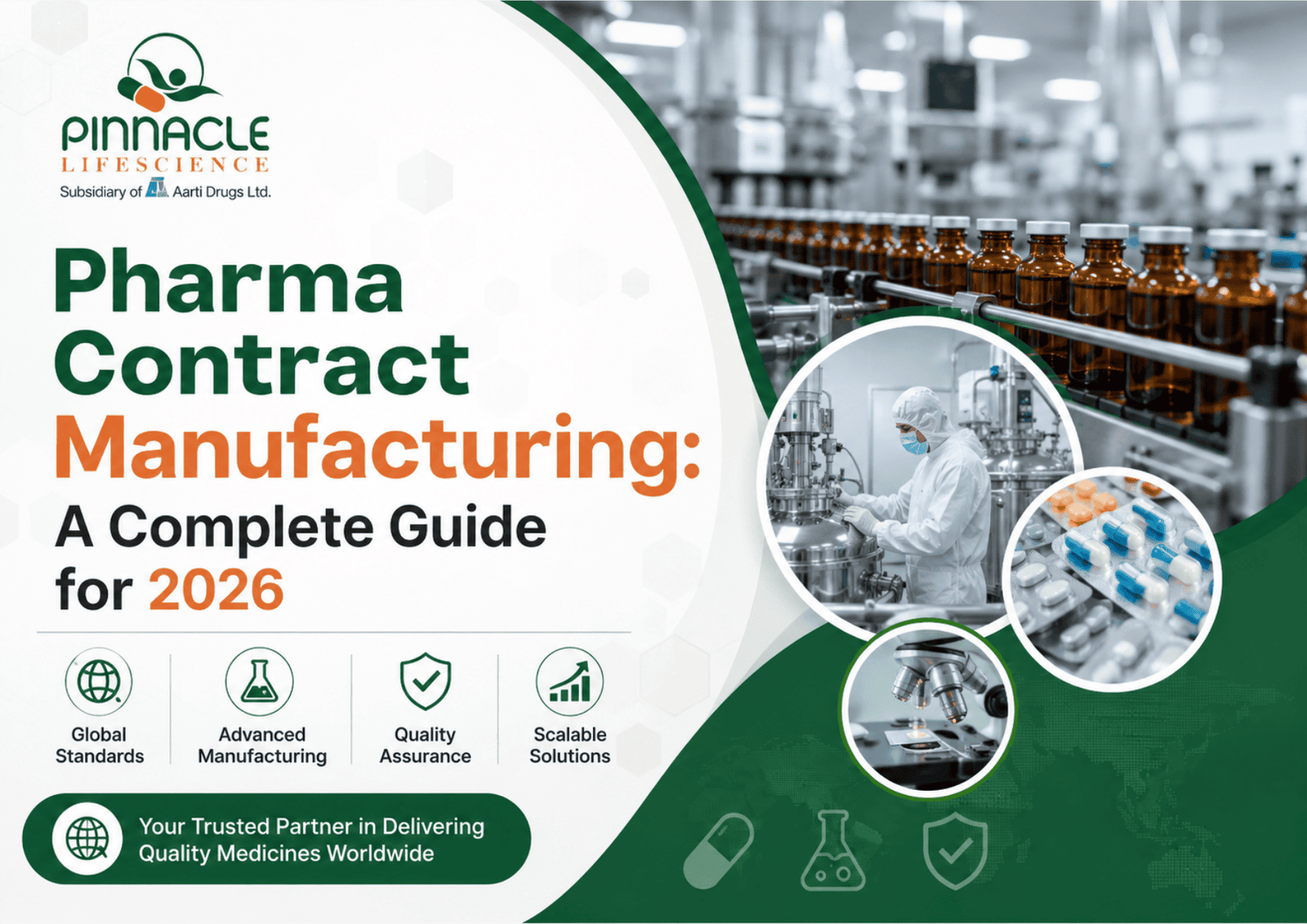
The pharmaceutical industry runs on speed, precision and trust. Every tablet, capsule or injectable that reaches a patient has passed through strict formulation, testing and packaging steps before it ever leaves a factory. Not every pharma company wants to build and run this entire setup on its own, and that is exactly where pharma contract manufacturing comes in.
This model has quietly become the backbone of the global drug supply chain. From small biotech startups to large multinational brands, almost everyone leans on outsourced production at some stage. This blog breaks down what pharma contract manufacturing actually means, why it matters in 2026, and how to pick the right partner for your brand.
What Is Pharma Contract Manufacturing?
In simple words, pharma contract manufacturing is when a pharmaceutical company hands over the production of its medicines to a specialised third party manufacturer, instead of building its own plant. The brand shares the formula, quality benchmarks and packaging requirements, and the manufacturer takes care of production, testing and delivery.
This arrangement works well for both sides. The brand saves years of setup time and crores in capital investment, while the manufacturer gets to focus purely on what it does best: producing safe, effective and compliant medicines at scale.
Companies offering this service are usually called Contract Manufacturing Organizations, or CMOs. Some go a step further and also help with formulation and development work, and these are known as CDMOs. Either way, a good contract manufacturing organization pharma partner should bring proven infrastructure, regulatory experience and a track record of consistent quality.
Why Pharma Companies Choose This Model
The reasons brands move towards outsourced production are fairly consistent across the industry:
Lower capital cost. Setting up a GMP compliant plant needs heavy investment in land, machinery and manpower. Outsourcing removes this burden almost completely.
Faster market entry. An established manufacturer already has the approvals, equipment and workforce ready, so production can start much sooner than building from scratch.
Access to expertise. Experienced pharmaceutical contract manufacturers understand regulatory documentation, stability studies and quality systems in far greater depth than a brand managing production for the first time.
Scalability. Demand for medicines can shift quickly. A good manufacturing partner can scale batches up or down without the brand worrying about idle capacity or capacity shortage.
Focus on core strengths. Brands can put their energy into research, marketing and market expansion, while production stays in the hands of specialists.
How the Process Works
Most contract manufacturing engagements follow a similar path:
- Agreement and scope finalisation – Both parties agree on product specifications, timelines, pricing and quality expectations.
- Technology transfer – The brand shares its formula, raw material list and manufacturing process details with the manufacturer.
- Production – The manufacturer sources raw materials, runs the batches and follows the agreed process under strict quality checks.
- Quality testing – Every batch goes through analytical testing to confirm it meets pharmacopoeial and regulatory standards.
- Packaging and dispatch – Once cleared, products are packed, labelled and shipped to the brand or directly to the market.
This cycle needs tight coordination and documentation, which is why choosing an experienced manufacturing partner matters so much.
Why India Leads the Pharma Contract Manufacturing Market
India has earned its reputation as the pharmacy of the world for good reason. The country offers a rare mix of cost efficiency, skilled manpower and regulatory maturity that few other regions can match.
Indian manufacturing units regularly clear inspections from the US FDA, WHO and European regulators, which gives global brands the confidence to outsource here. Add to that a large pool of trained chemists, pharmacists and quality professionals, and it becomes clear why so many international companies partner with Indian CDMOs for both generic and specialised drug production.
The pharmaceutical contract manufacturing market itself is expanding fast. Industry estimates place the global market value close to 200 billion dollars in 2024, with projections crossing 300 billion dollars by the end of the decade. Growth is being driven by rising demand for biologics, stricter regulatory expectations and the constant push towards cost efficient production.
What to Look for in a Manufacturing Partner
Not every manufacturer fits every brand. Before signing on, it helps to check a few things closely:
- Certifications such as WHO-GMP, ISO and US FDA approval
- Product range and whether it matches your therapy area, including specialised segments like oncology
- Quality systems and how deviations or complaints are handled
- Capacity to meet your current volume and future growth
- Transparency in communication, documentation and pricing
Brands working in specialised areas such as oncology often need partners with dedicated containment facilities and experience in handling high potency compounds. For a closer look at how this plays out in cancer drug production, our detailed guide on oncology CDMO trends for 2026 covers the standards that matter most.
The Road Ahead
Automation, AI driven quality checks and continuous manufacturing are steadily changing how contract manufacturers operate. Brands are also paying closer attention to regulatory compliance and sustainability, not just cost. We have covered some of these shifts in our blog on pharma manufacturing trends shaping 2026, and how regulatory frameworks are evolving in our piece on regulatory services in pharma.
At Pinnacle Life Science, we bring together US FDA approved facilities, strong R&D capabilities and years of experience across oncology, cardiovascular and anti-infective segments. Whether you are a growing brand looking for your first manufacturing partner or an established company expanding into new markets, choosing the right pharma contract manufacturing partner can shape how quickly and reliably your medicines reach patients.
Frequently Asked Questions
Is pharma contract manufacturing in India reliable for international brands?
Yes. Indian manufacturers routinely clear US FDA, WHO-GMP and European regulatory inspections, which makes India one of the most trusted destinations for outsourced drug production.
How do I shortlist pharma contract manufacturing companies?
Check their certifications, product portfolio, quality track record and capacity before signing an agreement. A site visit or audit is always worth doing before finalising.
Where can I get a pharma contract manufacturing pdf report?
Most manufacturers and market research firms offer downloadable brochures or market reports on request. Reach out directly to a manufacturer like Pinnacle Life Science for detailed product and capability documents.
What does pharma contract manufacturing look like in 2026?
The focus has shifted towards automation, AI backed quality control, sustainability and stricter regulatory compliance, alongside the usual cost and scalability benefits.
Which are the top 10 pharmaceutical contract manufacturing companies?
Names commonly seen at the top include Pinnacle, Akums, Sun Pharma, Cipla, Torrent, Dr Reddy’s, Hetero, Zydus, Mankind, Intas and Alkem, though rankings shift with scale and therapy focus.
What are the top 10 pharmaceutical third party manufacturing companies in India?
Beyond the larger names above, several specialised players focus purely on third party and loan licence manufacturing for smaller brands, offering flexible batch sizes and quick turnaround.
What is Akums third party manufacturing known for?
Akums runs multiple manufacturing facilities and handles a wide range of formulations, including allopathic and nutraceutical products, for hundreds of pharma brands.
How big is the pharmaceutical contract manufacturing market?
The global market was valued at roughly 200 billion dollars in 2024 and is projected to cross 300 billion dollars by 2029, growing at a steady annual rate driven by outsourcing demand and biologics growth.
